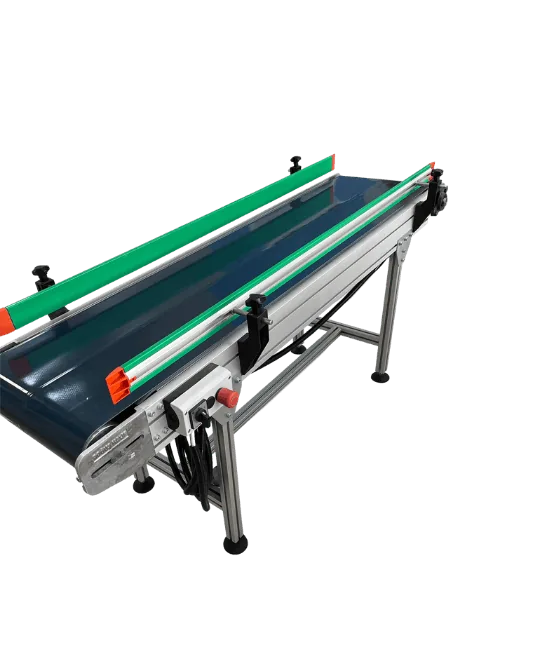
The material handling system on a production line is often an overlooked component — until it becomes the bottleneck that slows down the whole line. A conveyor belt system chosen with the wrong width or belt material both limits carrying capacity and increases maintenance cost. In this guide, we cover the key points to consider when choosing the right conveyor belt system.
Belt Width and Carrying Capacity
Belt width should be determined based on the hourly volume of material that needs to be carried. Narrow belts leave capacity insufficient, while an oversized belt unnecessarily increases both investment cost and energy consumption. Width should be determined by evaluating your current production speed together with your future growth plans.
Standard Belt or Food-Grade Belt?
On lines carrying food, pharmaceutical, or cosmetic raw materials, the belt material must be food-contact approved (FDA/EU certified). Standard PVC or rubber belts are sufficient for industrial material handling, while food-grade belts meet hygiene requirements with a seamless structure and an easy-to-clean surface.
Incline Angle and Material Slippage
On lines with elevation differences, the conveyor's incline angle should be calculated based on the friction coefficient of the material being carried. For granular or powder material, exceeding a certain incline angle can cause the material to slip back — in this case, cleats (retaining ridges) need to be added to the belt surface.
Motor Power and Speed Control
Fixed-speed motors are sufficient for simple applications, while variable-frequency (speed-adjustable) motors should be preferred for systems that need to run in sync with other machines on the line. This provides the flexibility to adjust line speed on the fly to match production rhythm.
Maintenance and Spare Parts Access
Maintenance requirements such as belt tension adjustment, bearing replacement, and cleaning frequency vary by conveyor type. With domestically manufactured systems, access to spare parts and technical service is significantly faster than with imported systems — which reduces unplanned downtime.
Conclusion
Choosing a conveyor belt system should be shaped by the type of material being carried, line speed, and industry-specific approval requirements. At AHF Makine, we manufacture standard and food-grade conveyor belt systems at our facility in Konya, offering configurations in width and length tailored to your existing production line.
Related Product: Conveyor Belt Systems →